 Канал на RUTUBE:

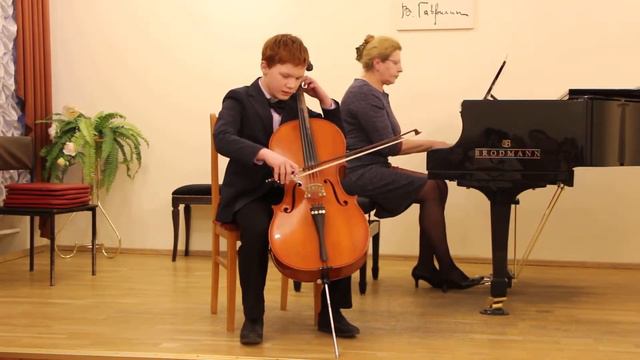
This is a solo and trio performance recorded live in Poughkeepsie NY on October 23 2016.
At the time of the concert all three musicians were members of The Orchestra Now.
Musician and orchestra links below.
Performers
Akiko Kamigawara violin
David Riker viola
Eleanor Lee violoncello
Individual Movement Timings
Bach 6th Suite for Cello in G major
Prelude - 00:21
Allemande - 6:17
Mozart Divertimento K.
563
Allegro - 00:37
Adagio - 07:18
Menuetto Allegro 14:35
Andante - 20:25
Menuetto Trio I Trio II - 27:58
Allegro - 33:13
Program notes written by David Riker
Bach 6th Solo Cello Suite BWV 1012 G major version for solo viola
Prelude
Allemande
Rediscovered in modern times by the 13-year old cellist Pablo Casals in 1890 J.S.
Bachs 6 Solo Cello Suites have become some of the most popular works in the repertoire for both listener and performer.
These 6 Suites as well as the Sonatas Partitas for solo violin are so beloved by performers that they have been widely arranged for many instruments.
They have become standard solo repertoire for viola players.
While the original is written in D major the version performed today is arranged in G major making fuller use of the violas range and ability to bring out the polyphonic nature of the music.
Polyphonic writing means music with two or more independent voices happening simultaneously.
On a single stringed instrument this illusion is created by either playing chords 2-4 notes at the same time arpeggios and drones.
The 6th Suite was written in 1720 when Bach was the Kapellmeister for Prince Leopold in Cothen.
It was originally written for a 5-stringed piccolo cello or viola pomposa with open strings tuned E-A-D-G-C.
The Prelude consists of almost continuous eighth notes with a particularly interesting use of drones to create polyphony: Bach writes identical notes one after the other but alternates an open string with a stoppedfingered string.
The aural result is exciting and helps create the tremendous forward momentum this Prelude exudes.
The Allemande that follows consists of smooth scale and arpeggio-like passages interspersed by multi-voice chords.
This movement is the emotional foundation of the entire 6th suite and gives the player the chance to sing more than almost any other solo movement Bach wrote.
Mozart Divertimento K.563
The Divertimento K.563 is Mozarts only string trio and one of the earliest written for this chamber music instrumentation.
It is Mozarts longest and by many critical accounts most innovative and inventive work of chamber music.
There is significant research suggesting that Mozart wrote this work as a sign of extreme gratitude to his Masonic brother Michael Puchberg who had loaned Mozart significant sums of money to help him survive the dire straits Mozart found himself in in 1787-88.
Mozarts infant daughter died at only a month of age at the end of January 1788 and his tour to Berlin brought him moderate success in name but Mozart still found himself practically penniless.
His desperation can be read in his letters addressed to Puchberg and the financial help he received did more than help Mozarts finances: it helped him end a 9 month composing hiatus.
Mozart himself played the viola in the premiere of this work.
The title Divertimento was formerly given to works that were lighter and more simple meant to accompany social events.
However the K.563 Divertimento is a deep and sublime work the title probably owing to the 6 movement structure.
The opening Allegro features Mozarts skill in passing melodic material among instruments and showcases the cello in a way hints at what a Mozart cello concerto would have been like.
The subsequent Adagio is meditative and impassioned in turn.
There is a pair of Menuetto movements each showing Mozarts humor and rhythmic inventiveness.
While each Menuet has a Trio the 2nd Menuet movement also has a 2nd Trio and Coda section.
In between these two dance-like but un-danceable movements is an expansive Andante in the form of theme and variations.
The work closes with an ebullient and gently fast-paced Allegro with an inner development section of rousing virtuosity.
Источник: rutube.ru

![Радио 24/7 🔴 LOFI Музыка для отдыха, работы и учебы 🌃 Уютный балкон [25.04]](https://pic.rtbcdn.ru/video/2026-04-25/6c/1a/6c1af66c2c362ec65cca9426ab6dae91.jpg)